
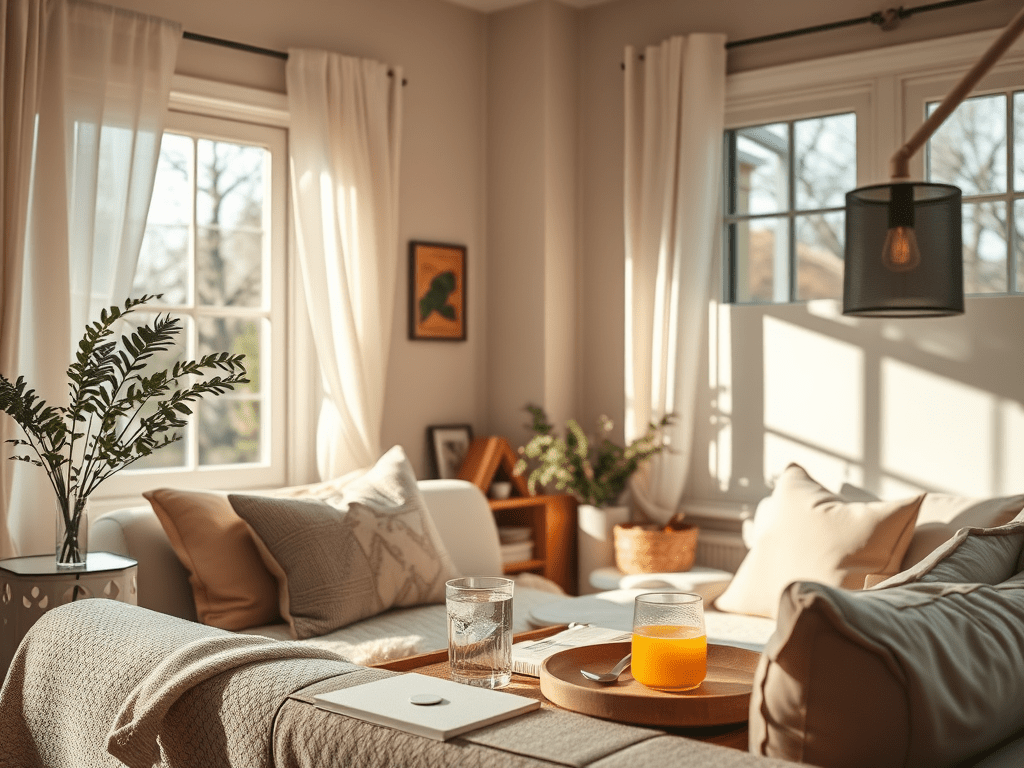
For years, the wellness industry has pushed us toward more and more routines. It has encouraged more productivity hacks. We have been led to consume more supplements. There are pressures to adopt more perfect morning rituals. Self-care slowly became another task on the to-do list, another area where we had to perform, optimize, and excel. But now, a new counter-movement is rising quietly from living rooms, bedrooms, and slow Sunday mornings. It’s being called the Great Lock-In. Unlike the lockdowns we endured in the past, this trend is about intentional retreat. It focuses on conscious slowing down and choosing home. This choice stems not out of restriction, but from self-respect.
The Great Lock-In suggests something radical: wellness doesn’t always require going somewhere, sometimes it requires staying still. And in a world addicted to movement, that stillness is becoming a powerful form of healing.
A New Kind of Wellness
The Great Lock-In might sound like a follow-up to pandemic living, but in spirit, it’s the opposite. It’s not about isolation, it’s about intention. It’s about turning our homes into restorative spaces, not workstations. Recent wellness conversations describe this shift as a rejection of the pressure to constantly improve ourselves. Instead of trying to “fix” everything all at once, people are prioritising slow, realistic, sustainable rituals.
This movement is rooted in simplicity. It involves small actions performed consistently. Gentle routines that feel good are emphasized over rigid plans that feel exhausting. It reflects a growing truth, that the most powerful wellness practices are often the most quiet, and the most transformative ones are often the smallest.
What’s Actually Happening?
At the heart of the Great Lock-In is a new philosophy: micro-wellness over mega-overhauls. Therapists and wellness experts are encouraging people to ditch the long, complicated routines and instead adopt 5–10 tiny weekly actions. These are not grand gestures, they’re small habits that are easy to complete, easy to enjoy, and easy to stick to. Examples include:
- A 15-minute walk each morning
- Drinking a full glass of water upon waking
- Writing one positive thought daily
- A simple, nourishing breakfast
- 5 minutes of stretching before bed
- Reading a page of a book before sleep
These practices may seem small, but their power lies in consistency. Unlike strict wellness systems that often lead to guilt or burnout, micro-habits build a sense of accomplishment, stability, and calm.
This shift is a reaction to years of people pushing themselves through hyper-optimized self-care. It is the kind that looks beautiful on Instagram but feels impossible in real life. The Great Lock-In says: stop trying to perfect your wellness; start actually living it.
It also encourages people to view home differently. Instead of seeing it as a containment space, it becomes a sanctuary, a place where rituals can unfold gently, in your own time, at your own pace.
Why It Matters Now
We are living in an era where people are overwhelmed not just by work but by wellness itself. Hustle culture disguised as self-care has silently taken over many people’s lives. The pressure to “be productive even in your relaxation” has left many feeling more exhausted than restored.
The Great Lock-In is the antidote.
It mirrors the World Health Organization’s core definition of self-care, promoting your own well-being with or without external support. This form of self-care is self-directed, internal, and deeply intuitive.
This trend is particularly significant in regions like India and Southeast Asia where urban life runs at full speed. Traffic, digital overload, work pressure, social commitments, this pace rarely leaves room for stillness. The Great Lock-In, therefore, becomes a counter-culture movement: a reminder that staying home, resetting, and slowing down is not just acceptable, but necessary.
It matters now because mental fatigue, burnout, and chronic stress are no longer exceptions, they are becoming everyday conditions. The pressure to “do more to feel better” has reached a breaking point. And people are finally ready to reclaim rest in a world that glorifies motion.
How You Can Apply It
The beauty of the Great Lock-In is its simplicity. You don’t need special tools, expensive retreats, or a perfectly curated routine. You only need willingness and a little consistency.
Here’s how you can start:
1. Choose One Small Action for the Week
Instead of rewriting your entire life, pick ONE manageable ritual.
For example:
“Tonight, no screens an hour before bed.”
It’s small. It’s doable. And it has an instant emotional impact.
2. Create a Micro Self-Care List
Write a list of simple activities such as:
- Walk 10 minutes
- Drink a full glass of water in the morning
- Stretch for 2 minutes
- Make your bed
- Spend 5 minutes doing deep breathing
These are tiny enough to complete even on difficult days.
3. Reflect at the End of the Week
Ask yourself:
- Which habits felt natural?
- Which habits felt forced?
- Did this make my week feel calmer or more chaotic?
This check-in helps you shape a routine that fits your life.
4. Build Slowly
Once a habit feels natural, add another.
The goal isn’t to force yourself into the “perfect routine.”
The goal is to grow gently into a rhythm that feels nourishing.
5. Personalize Your Safe Space
Turn your home into a wellness space with small touches:
- A corner for journaling
- A candle you light only during self-care
- Soft lighting in the evening
- Music that signals “rest mode”
Tiny environmental changes shift your emotional state.
Things to Avoid
1. Don’t Over-Optimize Your Self-Care
Wellness isn’t a competition. You don’t need a 20-step routine.
If your self-care feels like work, you’re doing too much.
2. Don’t Shame Yourself for Rest
Home time isn’t laziness, it’s essential.
Rest is not a reward; it’s a biological need.
3. Don’t Compare Your Routine to Others
Your list of five small actions is enough.
Someone else’s intense routine doesn’t mean yours is inadequate.
4. Don’t Expect Transformation Overnight
Wellness is not a sprint.
The Great Lock-In works because it respects your pace.
A Quiet Revolution
The Great Lock-In isn’t dramatic. It won’t make headlines like big fitness trends or flashy wellness products. But perhaps that’s its magic. It thrives in the quiet spaces of your life. It exists in the gentle moments. It is present in the slow routines that make you feel human again.
It invites you to reset without pressure, to rest without guilt, and to return to yourself with softness. In a world obsessed with constant movement, choosing to stay still is a radical act of self-respect.
This is not about shutting the world out, it’s about tuning yourself back in.
The Great Lock-In is not a step backward.
It is a step inward.
And maybe, that’s exactly what we all need right now.
 Maison Avyra