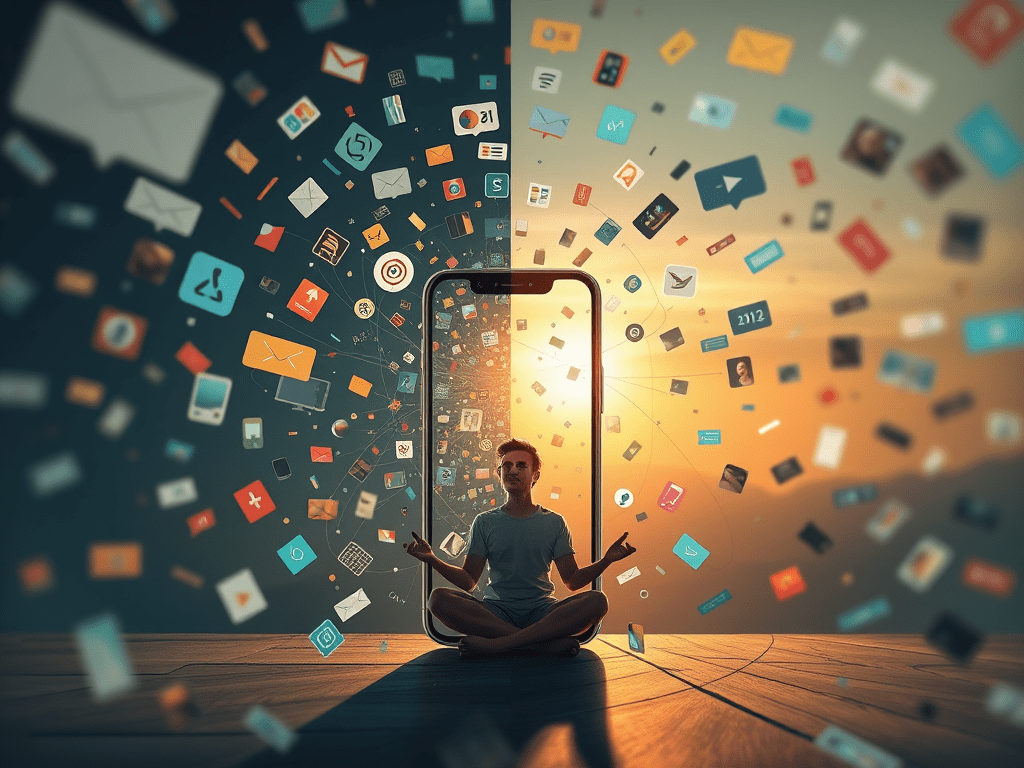
In today’s fast-evolving digital landscape, technology is no longer just a tool, it’s a constant presence woven into every minute of our lives. Our devices are convenient. Yet, today’s tech news highlights a growing concern. The average human now checks their phone 144 times a day. And for many, it’s not even intentional. It’s reflexive. Automatic. Almost addictive.
This isn’t convenience anymore, it’s compulsion.
The ease and speed of modern technology have quietly reshaped the human brain, attention span, and emotional rhythms. Notifications trigger micro dopamine hits. Endless scrolling creates momentary escape. Algorithms keep us hooked, curious, stimulated, and often overwhelmed. And in the midst of this, a new wellness challenge has emerged:
Digital Overwhelm Syndrome.
According to wellness experts across global reports, digital overwhelm is becoming one of the most common yet unseen stressors of our time. It’s not just about “spending too much time on your phone.” It’s deeper. It affects how you think, how you feel, how you rest, and even how you relate to the world around you.
People experiencing digital overwhelm report:
- Difficulty focusing
- Emotional fatigue
- Low-level anxiety
- Constant mental noise
- Dopamine imbalance
- Irritability
- Sleep disruption
- Difficulty being present
It’s not surprising that modern wellness conversations are shifting from productivity hacks and morning routines to something much more foundational: digital boundaries.
And from this shift, a new trend has emerged, one that’s practical, sustainable, and increasingly popular across all age groups: Micro-Detoxing.
The Rise of Micro-Detoxing: Small Digital Breaks With Big Impact
Unlike traditional digital detoxes, the dramatic 7-day, 30-day, or “delete all apps” challenges, micro-detoxing is gentle, realistic, and deeply effective. It meets people where they are, not where they feel pressured to be.
Micro-detoxing is not about abandoning technology.
It’s about creating small, intentional pauses that reset the brain, recalibrate focus, and restore emotional balance.
These are tiny daily rituals that don’t disrupt life but dramatically improve its quality.
Examples of Micro-Detox Habits People Love
These simple practices are spreading worldwide because they are easy to implement and surprisingly transformative:
1. No phone for the first 30 minutes after waking
Instead of waking up and diving into alerts, messages, and mental clutter, the first half hour becomes a sacred, peaceful space. The brain transitions gently, not chaotically.
2. One screen-free meal per day
This small shift improves digestion, presence, and emotional nourishment. People report feeling more grounded after just a few days.
3. A 10-minute evening digital shutdown ritual
Turning off screens, dimming lights, and engaging in a calming routine, stretching, journaling, or simply breathing, prepares the nervous system for deep sleep.
4. App-free Sundays
Not a full detox day, but a slow, intentional pause from the apps that consume the most time. People choose one or two apps to step away from, creating instant mental clarity.
5. Replacing doomscrolling with grounding practices
Each time the urge to scroll appears, people substitute it with a micro-practice:
- 10 slow breaths
- Light stretching
- Looking outside for 30 seconds
- Drinking a glass of water
These tiny actions break the cycle of unconscious consumption.
What makes micro-detoxing so powerful is that it’s not built on restriction. It’s built on awareness.
Why Micro-Detoxing Is Spreading Worldwide
Three main reasons explain why this trend is rapidly becoming part of modern wellness culture:
1. It’s sustainable
Unlike long detox challenges that people start and abandon, micro-detoxing fits naturally into everyday life. It doesn’t require dramatic changes or perfection, just small doses of intention.
People see results quickly, so they stay consistent.
2. It doesn’t require lifestyle disruption
You don’t have to quit your job, take a vacation, delete all apps, or disconnect entirely. Micro-detoxing works within your digital life, not against it.
It’s a gentle reset, not a rejection of technology.
3. It gives instant relief
This is the biggest reason micro-detoxing is exploding.
People notice benefits within 24–48 hours:
- Calmer thoughts
- Reduced anxiety
- Better focus
- Fewer dopamine crashes
- Deeper sleep
- More presence in daily activities
- More emotional bandwidth
The impact is immediate, and the effort is minimal, a win-win for modern life.
Digital Overwhelm: The New Stress We Didn’t See Coming
For years, society has talked about stress from work, relationships, finances, and health. But digital stress, constant notifications, endless multitasking, information overload, has quietly become one of the most pervasive stressors of modern life.
It drains attention.
It fragments thoughts.
It shortens patience.
It overstimulates the nervous system.
It destabilizes emotional balance.
And perhaps the most concerning: it reduces our ability to rest.
Our brains were not designed for continuous input. They require moments of silence, pauses between stimuli, and breaks from constant alertness.
Micro-detoxing reintroduces those pauses back into the rhythm of our daily lives.
Technology Isn’t the Enemy, Lack of Boundaries Is
One of the most refreshing aspects of this trend is its realistic perspective. Micro-detoxing is not anti-technology. It doesn’t shame people for using their phones or enjoying digital life.
Instead, it promotes something healthier and more modern:
A relationship with technology that feels balanced, not consuming.
We are not meant to be available 24/7.
We are not meant to react instantly to everything.
We are not meant to absorb endless information without rest.
Micro-detoxing helps reclaim control. It teaches the mind to pause before reacting, to breathe before scrolling, and to choose presence over compulsion.
The Next Era of Wellness Is Pro-Boundary
As digital overwhelm becomes increasingly common, wellness culture is shifting from escapism to empowerment. People don’t need to escape technology, they need to reshape their relationship with it.
The future of wellness won’t ask people to disconnect completely.
It will show people how to live with technology. This approach protects their mental clarity. It also safeguards emotional energy and nervous system health.
Boundaries will become the new self-care.
Digital pauses will become the new meditation.
Micro-detoxing will become a foundational wellness ritual, simple, sustainable, and profoundly healing.
The next era of wellness is not about saying “no” to technology.
It’s about saying “yes” to your mental space, your energy, and your peace.
Because the truth is simple:
Technology speeds up life.
Boundaries slow it down, just enough for you to breathe.
 Maison Avyra