
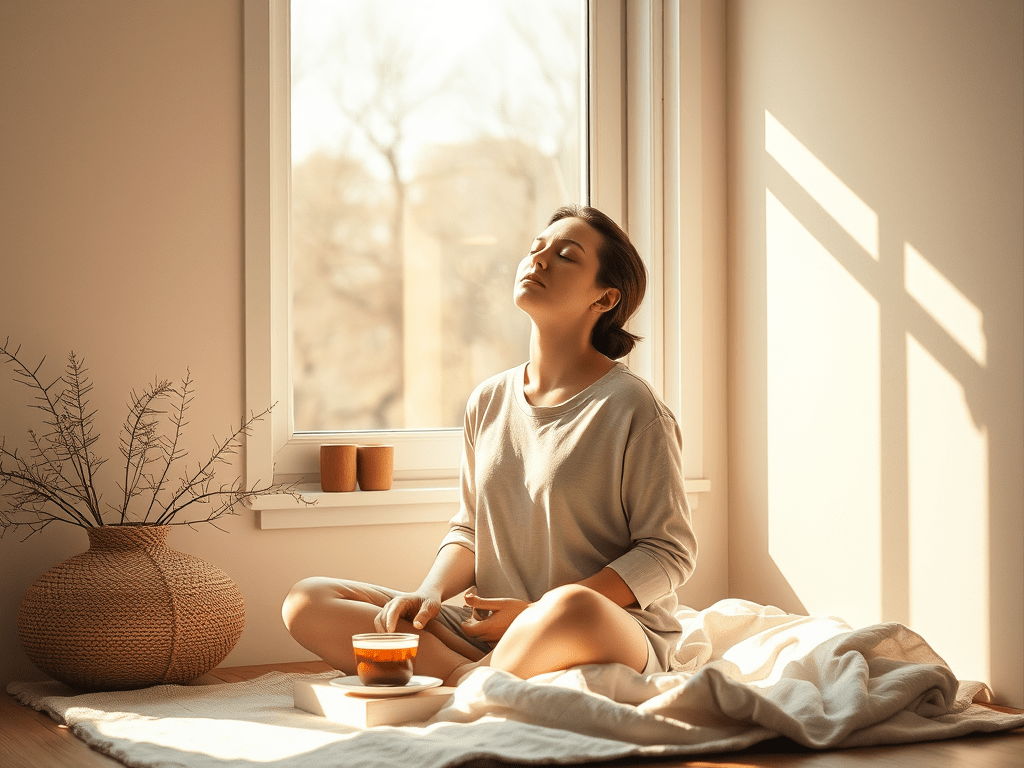
Across today’s wellness headlines, one message is becoming impossible to ignore:
People are no longer chasing productivity, they’re chasing calm.
For years, self-care was framed as something you squeezed into an already packed life. Wake up earlier. Do more. Optimize harder. Even rest became another task to complete efficiently. The global rise in burnout, anxiety disorders, and emotional exhaustion has forced a long-overdue realization. Stress-related illnesses have also contributed to this. The problem was never a lack of effort. The problem was a nervous system that never felt safe enough to slow down.
Wellness is now shifting from performance to regulation, from doing more to being supported. At the center of this shift is one powerful idea: true self-care begins with teaching your nervous system that it is safe again.
The Burnout Era Changed Everything
Burnout is no longer limited to high-pressure careers or extreme lifestyles. It shows up in people who appear successful, disciplined, and “put together.” Many individuals are doing everything right on the surface, exercising, eating well, meeting goals, yet feel chronically tired, emotionally reactive, numb, or disconnected.
This contradiction is what brought nervous-system health into the spotlight.
When stress becomes chronic, the body adapts. It learns to stay alert. Muscles remain tense. Breathing becomes shallow. The mind stays hypervigilant. Over time, this constant state of readiness drains energy and emotional capacity. Rest no longer feels restful. Calm feels unfamiliar, sometimes even unsafe.
Wellness experts now emphasize that many modern struggles are not failures of mindset or motivation, but physiological responses to prolonged stress. The body isn’t broken. It’s responding exactly as it was designed to, by trying to protect you.
Why This Trend Is Exploding Right Now
The focus on nervous-system regulation isn’t a passing wellness fad. It’s a response to the reality of how people are living today.
Chronic stress has become normalized.
Fast-paced work cultures, financial uncertainty, global instability, digital overload, and social comparison keep the nervous system in a constant low-grade threat response. Even when nothing is “wrong,” the body doesn’t get the signal to relax.
High-functioning dysregulation is common.
Many people are productive, organized, and outwardly calm while internally feeling anxious, irritable, or emotionally disconnected. This disconnect has led to confusion, and a deeper search for answers beyond surface-level self-care.
Traditional self-care isn’t addressing root causes.
Bubble baths, productivity planners, and intense workouts can be helpful, but they don’t always calm a system that has learned to survive through tension. Without regulation, even healthy habits can become another source of pressure.
As a result, wellness is shifting inward. Instead of asking, “What else can I do?” people are asking, “What does my body need to feel safe?”
Understanding the Nervous System in Simple Terms
Your nervous system’s primary job is protection. It constantly scans for cues of safety or danger, not just physical threats, but emotional and social ones as well.
When it perceives danger, it activates survival responses like fight, flight, freeze, or shutdown. These responses are not choices. They are automatic. They happen before conscious thought.
When stress is short-lived, the body naturally returns to balance. But when stress is ongoing, the nervous system stays activated. Over time, this leads to exhaustion, anxiety, sleep disturbances, digestive issues, emotional reactivity, and burnout.
Regulation doesn’t mean eliminating stress.
It means helping the body move out of survival mode and back into a state of rest, connection, and repair.
What Nervous-System Self-Care Really Looks Like
This new wave of self-care looks very different from what many people are used to. It’s quieter. Slower. Less performative. And far more effective.
Slower mornings with less screen exposure
The nervous system is highly sensitive in the first moments after waking. Checking notifications, emails, or news immediately signals urgency. Gentle mornings, natural light, slow movement, silence, help set a calmer baseline for the day.
Breathwork and grounding over intensity
Instead of pushing the body harder, regulation-focused care emphasizes practices that send safety signals. These include slow breathing, grounding exercises, and gentle stretching. Walking or simply sitting without stimulation are also effective methods.
Consistency instead of motivation
A regulated nervous system thrives on predictability. Small, repeated actions done consistently are more calming than occasional intense efforts fueled by motivation or guilt.
Emotional safety over hustle culture
This includes setting boundaries and reducing self-criticism. It also involves allowing rest without justification. Choose environments and relationships that feel supportive rather than draining.
In this model, self-care is not about fixing yourself. It’s about supporting your system so it doesn’t have to stay on guard all the time.
Why Calm Is Not Laziness
One of the biggest barriers to nervous-system care is the belief that slowing down equals weakness. It is seen as laziness or a lack of ambition. This belief is deeply rooted in hustle culture and productivity-based self-worth.
But biology tells a different story.
Calm is not the absence of drive.
Calm is the foundation of sustainable energy.
When the nervous system feels safe:
- Focus improves
- Creativity increases
- Emotional regulation becomes easier
- Rest actually restores energy
- Decision-making becomes clearer
In other words, calm doesn’t reduce capacity, it restores it.
A regulated system doesn’t mean you stop striving. It means you stop burning yourself out in the process.
The Emotional Side of Regulation
Nervous-system care isn’t just physical. It’s deeply emotional.
Many people learned early in life to stay alert, strong, or self-reliant because emotional safety was inconsistent. For these individuals, slowing down can feel uncomfortable at first. Stillness may bring up emotions that were previously suppressed by busyness.
This is why gentleness matters.
Regulation is not about forcing relaxation. It’s about building trust with your body over time. Listening instead of pushing. Responding instead of overriding.
As that trust grows, the nervous system learns a new pattern. In this pattern, rest is allowed. Emotions are safe to feel, and calm is no longer foreign.
Calm as a Daily Practice
Calm is not something you achieve once and keep forever. It’s a daily practice of choosing signals of safety over signals of threat.
It looks like:
- Pausing before reacting
- Letting your breath slow naturally
- Allowing yourself to stop when tired
- Choosing environments that feel supportive
- Speaking to yourself with compassion
These choices may seem small, but to the nervous system, they are powerful.
Wellness Takeaway
Calm is no longer a luxury.
It is a biological necessity.
Healing does not begin with discipline, productivity, or self-improvement.
Healing begins when your body feels safe enough to rest.
And in a world that constantly demands more, choosing calm may be the most radical form of self-care there is.
 Maison Avyra